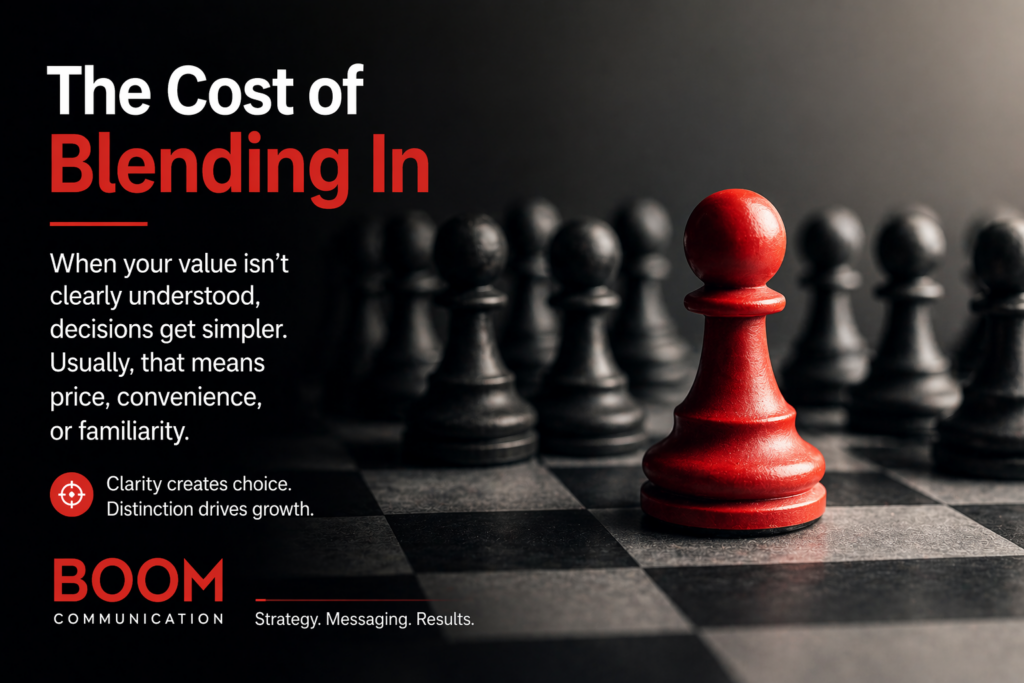
Most organizations believe they are reducing risk.
In many cases, they are simply delaying it.
Why Stability Feels Right
Playing it safe is easy to justify.
Stay consistent.
Rely on what has worked.
Avoid unnecessary change.
In stable conditions, this approach works.
It protects what has already been built.
What Changes Over Time
The environment does not stay the same.
Buyer expectations shift.
Competition evolves.
New approaches become standard.
What once differentiated now blends in.
This is where the problem begins.
How Risk Becomes Less Visible
The risk is no longer obvious.
Revenue does not collapse.
The business continues to operate.
However, something changes.
Growth slows.
Wins become less predictable.
Opportunities take longer to convert.
Nothing appears broken.
But momentum weakens.
The Revenue Reality
When an organization stays anchored to past methods, revenue begins to behave differently.
Sales cycles extend.
Conversion becomes less consistent.
Effort increases without proportional return.
The instinct is to push harder.
More outreach.
More activity.
More refinement of the same strategy.
This rarely solves the problem.
What Growing Organizations Recognize
The organizations that continue to grow approach risk differently.
They do not avoid change.
They manage it.
They understand that standing still carries its own cost.
They evaluate what still works.
They adjust what no longer does.
They evolve how they create and capture value.
What This Means
Growth does not slow randomly.
It slows when the approach no longer matches the current environment.
At Boom Communication, this is where the conversation shifts. Not toward doing more, but toward understanding when it is time to rethink how growth is being produced.
When that becomes clear, progress becomes easier to regain.